- 907-531-9140

How to avoid picking a window seat, to find out there’s not really a window there
Oct 31 Update: SeatGuru is *poof* gone.
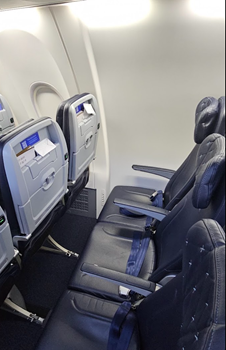
One of the most painful things a traveler can experience is when you select a window seat on a long flight, board the plane, stow your bags, and then notice that your window seat – does not, in fact, have a window. But instead, a side panel.
Yes, this is a real thing.
And it happens on a lot of planes.
Sadly, the airlines believe that you just don’t care about this – otherwise, they’d mark or notate these seats as “undesirable” or warn you that the window doesn’t exist or has limited or no view; just like some airlines will warn you that some rows don’t recline.
But its also avoidable with the right planning. And its even more annoying for travelers when the airlines CHARGE you for a window seat, and you expect there to be a window – and voila – you show up and its a side panel!
The reason some rows might not have a window seat is due to the construction of the aircraft. Most Boeing 737 models have cabin air-intakes beneathe the aircraft and flow the air into the cabin with a ventilation system that requires a certain amount of air – and the tubing is elongated (flat) and won’t fit in the space between windows – so Boeing instead covered up windows with the air ducts flowing from below the cabin to the top, which then allows the air to be distributed thru the cabin. You’ll also see this on older model Boeing 747, 757, and 767 aircraft.
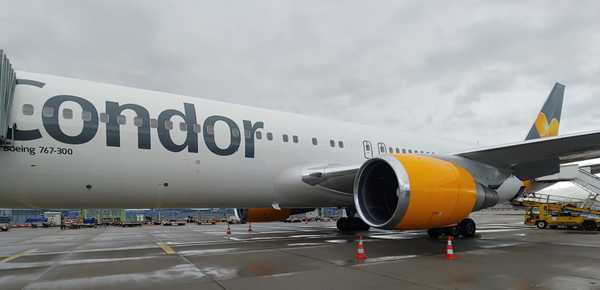
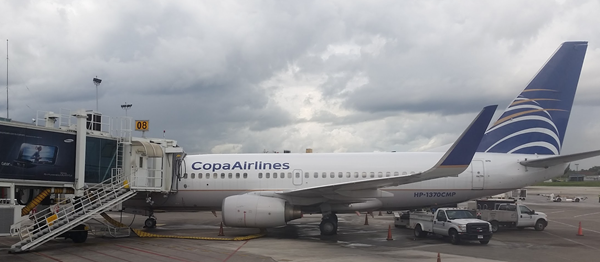
And sometimes, the airline may reconfigure the plane and add (or remove) seats and not unplug the windows; we see this in the last row of a handful of jets now and sadly its a bit harder to predict – but its another reason to avoid booking the last row as well. A handful of airlines have also added seats near exit doors – which typically don’t have a full size window, and the nearby full row may also not have much of a view. We see this on many Airbus A321 aircraft, as you’ll see below. So its important to do a bit of research if you are a picky seater – and also keep an eye on your flights every now and then in case of a plane – equipment change (which happens) and they update your seat.
Most online travel sites and airline websites aren’t very good at displaying where there’s an actual window versus not – but there are a few tools to help you see what the options are – including talking to your travel experts at Alaska Travel Desk 🙂
Below we have links to 2 websites that have a good database and general idea of aircraft layouts and seats – Aerolopa and SeatGuru.
- AEROLOPA
- Seat Guru (DEAD SITE NOW)
We used to really REALLY like Seat Guru, but since the website was purchased they have not updated the maps and quality is not what it used to be – but Seat Guru provides feedback from travelers who sat in specific seats; Aerolopa is our latest favorite and they’ve been very scientific in adding and checking the seatmaps and providing REAL data, not just planting seatmaps spoonfed info from the airlines.
But both will show you the seating diagram of most of the aircraft in each airlines fleet, and highlight when and where windows don’t exist, or where the view could be severely limited if the row in front of you reclines (which is what we see on the Boeing 737s).
And also, a *good* travel agent can also help you with this – as many of us are very frequent fliers and know how to find the data if its not readily available to you.
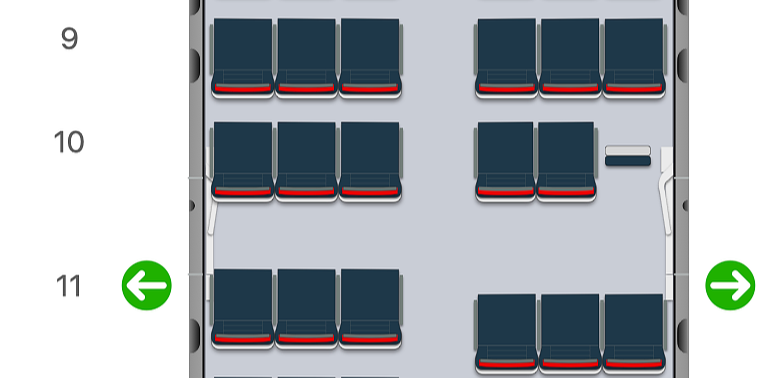
One consistent find we see is in the Airbus A321 aircraft – no matter the airline, they are putting seats near the 2nd set of doors in front of the wings of the aircraft. Airbus doesn’t really customize fuselages like Boeing, so there’s no windows there to plug or unplug, so in the example above, anyone in Row 10 & 11ABC on American Airlines A321 (CEO) won’t have a view of anything – at all!
American isn’t the only airline that does this – so its important to keep an eye on your flight’s seat map to see what configuration of Airbus A321 is operating the route you are flying; some airlines will even place a flight attendant jumpseat at the aisle instead of by the window, meaning you’ll have a seat mate during take off and landing.
And while we’re on the topic of the Airbus A321s, all models have a set of emergency exits behind the wing – and many airlines will put seats adjacent to the door; while you get some amazing legroom, there’s no view – at all. So you are sitting there staring at either a bulkhead, a bathroom, or a row of seats. Some of the new A321Neos are using a full size window in some of these doors, however they have been slow to get added to many in the US fleet.
Always check and see what the rear portion of your Airbus looks like, as some rows will have a window (like Hawaiian Airlines displays), but some carriers may have the row pushed forward a bit and you not only don’t have a window, but also a door just directly in front of your seat.
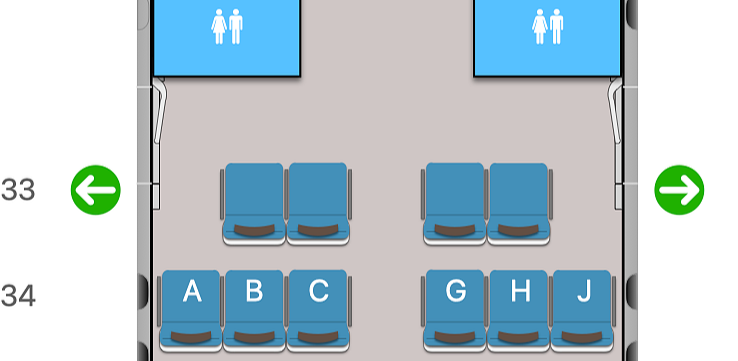
When it comes to the more common Boeing 737, the air ducts required Boeing to “skip” some windows – which is why some rows towards the front will not have a window at all. Some airlines have their cabin laid out where you can get a partial view (until the row in front of you reclines), which is why some of the seat maps make this a bit hard to figure out where to sit. Honestly, if your view is super important, then we recommend avoiding these rows in general.
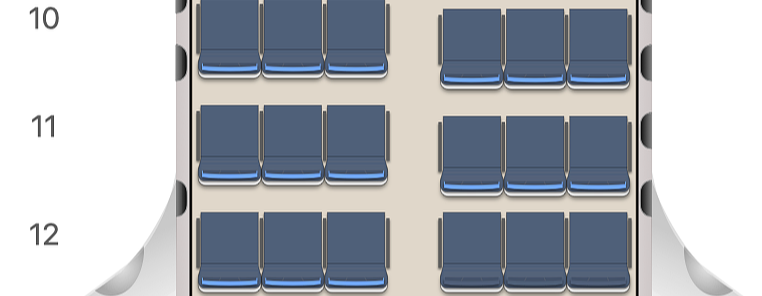
Seats without windows has even resulted in a class-action lawsuit against United Airlines – which charges up to $59 for seat 11A in most of its Boeing 737 aircraft – which is a seat without a view! What strikes us about the entire ordeal is airlines have long had the coding to mark seats undesirable and newer techology even allows the airlines to tell the distribution systems (and one would think their own website) which seats have no view, limited or no recline, etc. And many will notate recline limitations, but NOT lack of window. So we will be watching this lawsuit closely.
And most widebody aircraft, especially Boeings, do not have windows near the main exit doors – so while many will charge $50 to $300 for these seats, not only will you not have a view, but the “window” seat may also be pushed up against the slide-raft stuffed in the door, impeding your legroom even more.
Seats & Rows to Avoid
Here’s our list of most common airlines we use and the seats we recommend to avoid. Please note, aircraft configurations vary frequently so we’ll try to keep this list updated.
- Copa Airlines - Boeing 737-700; Row 7
- Copa Airlines - Boeing 737-800(A); Row 8
- Copa Airlines - Boeing 737-800(B); Row 7A
- Copa Airlines - Boeing 737- Max 9 (16 seats in Dreams): Seat 7A
- Copa Airlines - Boeing 737- Max 9 (12 seats in Dreams): Seat 9A, 10F
- Delta - Boeing 767-300: Row 6, 22
- Delta - Airbus A320: Row 33
- Delta - Airbus A321 (reg): Row 12, 26
- Delta - Airbus A321Neo: Row 30
- Delta - Boeing 717: Rows 27, 28, 29
- Delta - Boeing 737-900: 11A, 15A, 16A
- Delta - Boeing 757-200: Row 22
- Delta - Boeing 757-300: Row 14, 23
- Frontier Airlines - Airbus A321 (reg); Row 10, 26, 27, 41
- Frontier Airlines - Airbus A321Neo; Row 28DE, 29, 40, 41
- Hawaiian Airlines - Boeing 717: Rows 25, 26, 27
- Hawaiian Airlines - Boeing 787: Row 6, 33, 45
- Hawaiian Airlines -Airbus A321neo: Row 15, 16, 33, 46
- JetBlue Airways- Airbus A321 (reg, all coach): Row 9, 22, 23
- JetBlue Airways- Airbus A321 (Reg, with Mint): Row 18
- JetBlue Airways - Airbus A321Neo (All coach): Row 24, 34
- JetBlue Airways - Airbus A321LR: Row 23
- Spirit - Airbus A319: Row 26
- Spirit - Airbus A320 (reg): Row 31
- Spirit - Airbus A320Neo; Row 31
- Spirit - Airbus A321 (reg): Row 10, 24DE, 25, 39
- Spirit - Airbus A321Neo: Row 29, 40
- Sun Country Airlines - Boeing 737-800: Row 10A, 11F
- United Airlines - Boeing 767-400: Row 21
- United Airlines - Boeing 777-200ER (Intl): Row 40
- United Airlines - Boeing 777-200ER (Domestic): Row 39
- United Airlines - Boeing 777-300ER: Row 30, 31,45
- United Airlines - Boeing 787-8: Row 42, 50
- United Airlines - Boeing 787-9 (Intl #1): Row 42
- United Airlines - Boeing 787-9 (Intl #2): Row 30, 41
- United Airlines - Boeing 787-10: Row 42
- United Airlines - Airbus A321neo: Row 30ABC, 31DEF
- United Airlines - Boeing 737-700: Row 10
- United Airlines - Boeing 737-800/Max 8: Row 11A, 38
- United Airlines - Boeing 737-900/Max 9: Row 11A, 12F
- United Airlines - Boeing 757-300: Row 7, 17, 18
- WestJet - Boeing 787-9: Row 25, 26, 37
- WestJet - Boeing 737-700: Row 7
- WestJet - Boeing 737-800: Row 9A, 10F
- WestJet - Boeing 737-800 (Ex Sunwing): Row 11A, 12F
- WestJet - Boeing 737-Max 8: Row 9A, 10F
- WestJet - Boeing 737-Max 8 (Ex Sunwing): Row 11A, 12

Air Canada
Boeing 737 Max 8 (Standard, not Rouge): 11A, 11F
Airbus A321: Row 16, 29, 41
Boeing 777-300: Row 31
Boeing 787-9: Row 31, 39

Alaska
Boeing 737-700: 8A, 8F
Boeing 737-800/Max 8* (row 16/17 are full rows at the overwing): 10A, 32A
Boeing 737-800/Max 8* (row 17 missing seats A/F): 9A
Boeing 737-900/Max 9: 11A

American
Boeing 737-800/Max 8: 12A
Boeing 777-200: Row 18, 26
Boeing 777-300ER: Row 3, 16, 31
Boeing 787-8: Row 20, 28
Airbus A321 (Std): Row 10, 11A, Row 24
Airbus A321Neo (No door in front of wing): Row 27
Airbus A321Neo (door at row 10 in front of wing): Row 10, 11A, Row 24
Airbus A321XLR: Row 26
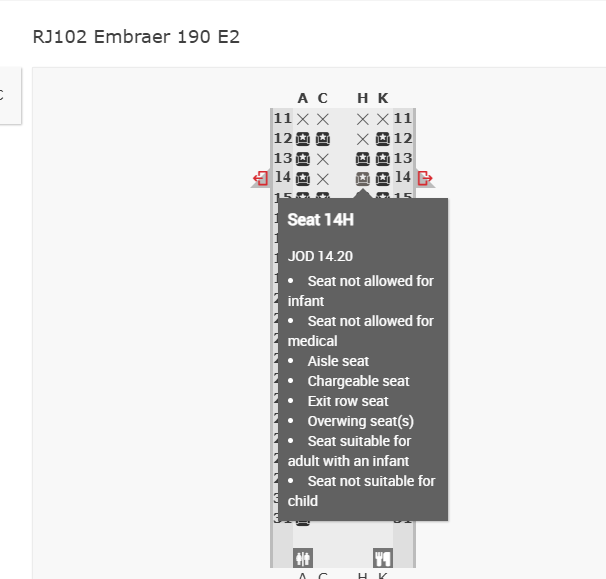
Conclusion: It just blows my mind that airlines – with all the current technology – doesn’t mark seats with no window. Airlines right now have the ability to add comments to both their websites and travel agent systems to mark which seats are desirable vs non yet they don’t.
So part of me hopes the lawsuit against United prevails and enacts change.
Just odd that an airline in the Middle East can do it, but US airlines can’t?
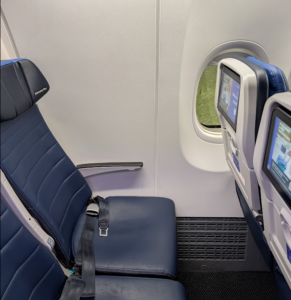
Window seat or not?